Clap the Beat Music Learning Game: A Practical Tool for Rhythmic Development and Aural Training
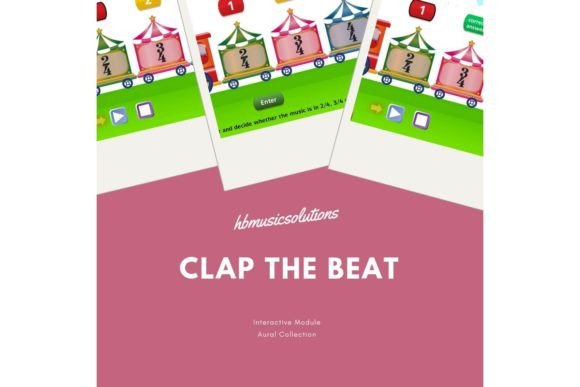
Mastering rhythm is a foundational skill in music education, particularly for students preparing for early-grade examinations like ABRSM Grades 1 and 2. The Clap the Beat Music Learning Game offers a structured and interactive way to build this skill through aural training and rhythmic recognition exercises. Designed for students and educators alike, this digital tool provides a focused environment for practicing time signatures—specifically 2/4, 3/4, and 4/4—with 50 randomized examples drawn from multiple musical genres.
Unlike traditional methods that rely on passive listening or written notation, Clap the Beat encourages active participation. By clapping along with the examples and then verifying the correct time signature, users engage both auditory and kinesthetic learning styles. This dual engagement enhances retention and understanding, making it a valuable addition to any music learning routine.
Integrating Clap the Beat into the Learning Workflow
Whether used independently or as part of a broader music curriculum, the Clap the Beat Music Learning Game fits naturally into various stages of the learning process. Before a lesson, students can warm up with a few examples to reinforce their sense of pulse and meter. During a session, teachers can use the game as a diagnostic tool to assess a student’s real-time rhythmic perception. After instruction, it serves as a review mechanism, helping learners solidify what they’ve just practiced.
For independent learners or those engaged in distance education, the game functions as a self-contained aural training module. It eliminates the need for constant teacher supervision, allowing students to work at their own pace while still receiving immediate feedback. This makes it especially useful for homeschooling environments, online music programs, or hybrid learning models where flexibility and autonomy are key.
Compatibility and Setup: What You Need to Know
The Clap the Beat Music Learning Game is delivered as a downloadable digital product. Users receive a zip file containing both computer and tablet versions, though it’s important to note that the current format is not compatible with Mac devices. On computers, the files must be unzipped first, and then launched via the “LAUNCH STORY” command.
For tablet users, an additional step is required: installation of the free Articulate Mobile Player app. Once installed, this app allows for seamless access to the game via provided links. All necessary instructions and download links are included in a PDF document, ensuring users can get started without unnecessary friction.
While the setup process may seem slightly technical at first glance, it follows a standard digital product workflow. Educators and parents may want to prepare in advance by downloading and installing the required app before introducing the game to students. This small upfront effort pays off in smoother, uninterrupted use later on.
Practical Use Cases Across Educational and Creative Settings
Because the Clap the Beat Music Learning Game is structured around time signature recognition, it has broad applicability across different learning scenarios. Here are a few practical examples of how it can be integrated into real-world workflows:
- Before a Composition Session: Composers and songwriters can use the game to warm up their rhythmic awareness before writing new material. This helps maintain a strong internal sense of timing, especially when shifting between different time signatures.
- During a Music Class: Teachers can project the game onto a screen and use it as a group activity. Students clap together, then discuss their answers, fostering both rhythmic accuracy and collaborative learning.
- After a Theory Lesson: Reinforce time signature concepts by assigning a few rounds of the game as homework. The randomized examples ensure students aren’t just memorizing patterns but truly internalizing rhythmic structures.
- As Part of Exam Preparation: For students working toward ABRSM or similar exams, regular use of the game can serve as targeted aural practice, helping them feel more confident during the listening components of their assessments.
Workflow Efficiency and Long-Term Use Considerations
One of the strengths of the Clap the Beat Music Learning Game is its efficiency. Each session is short—typically lasting just a few minutes—but highly focused. This makes it ideal for integration into daily practice routines without overwhelming the user. The random generation of examples ensures that no two sessions are exactly alike, which supports long-term engagement and prevents rote memorization.
From an organizational standpoint, educators can track progress by noting how consistently students identify the correct time signatures over time. While the game does not include a formal scoring system, visual confirmation of correct answers allows for self-assessment and teacher observation. For those who prefer a more structured tracking method, a simple log or checklist can be used alongside the game to monitor improvement.
Consistency is key when developing rhythmic skills, and the game’s accessibility—on both computers and tablets—supports regular use. Whether used at home, in a studio, or during a remote lesson, it adapts easily to different environments. This flexibility is especially valuable for educators managing multiple students or parents overseeing a child’s practice schedule.
Quality and User Experience: Design That Supports Learning
The interface of the Clap the Beat Music Learning Game is intentionally simple, prioritizing clarity and ease of use. The absence of distracting visuals or complex menus ensures that users can focus entirely on the rhythmic content. This minimalist design aligns with best practices in educational technology, where reducing cognitive load leads to better learning outcomes.
The inclusion of examples from different musical genres adds another layer of value. Rather than presenting rhythm in isolation, the game embeds it within familiar musical contexts, helping students recognize how time signatures function in real-world music. This contextual learning supports deeper understanding and makes the experience more engaging.
Final Thoughts: A Seamless Addition to Music Learning Workflows
The Clap the Beat Music Learning Game is more than just a digital exercise—it’s a practical, adaptable tool that supports rhythmic development in a way that aligns with modern learning environments. Whether you're a music teacher looking for a new classroom activity, a parent supporting a child’s home practice, or a self-directed learner preparing for exams, this game offers a structured and enjoyable way to build essential rhythmic skills.
Its ease of integration, compatibility with both computer and tablet platforms, and alignment with early-grade music curriculum make it a worthwhile investment for anyone involved in foundational music education. By incorporating it into a regular practice or teaching routine, users can develop a stronger internal sense of rhythm—setting the stage for more confident performance, composition, and listening experiences.