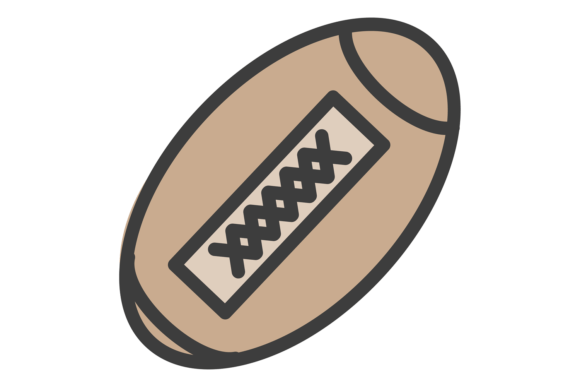
Rugby Ball Icon. American Football Game: Choosing and Using Sports Symbols the Right Way
When designing visuals for sports-related content, marketing materials, or digital interfaces, the Rugby Ball Icon. American Football Game often comes up as a go-to symbol. While it may seem straightforward to select and use, this icon carries nuances that many overlook. Whether you're a marketer, educator, or content creator, understanding how to properly choose and apply this icon can significantly impact your project's clarity and professionalism.
One of the most common points of confusion is mistaking the rugby ball for the American football shape. Though similar in form, the subtle differences matter, especially in branding or educational contexts where accuracy is key. The Rugby Ball Icon. American Football Game is often used interchangeably, but it's important to know when each is appropriate to avoid misrepresentation.
Common Mistakes When Choosing or Using the Rugby Ball Icon
Many people assume that all oval-shaped ball icons are the same. This can lead to using the wrong symbol in contexts where the sport's identity matters. For instance, using a rugby ball icon in American football branding may confuse your audience or appear unprofessional. Similarly, choosing the wrong file format—like using a low-resolution JPG when a scalable SVG is needed—can degrade the visual quality, especially in print or responsive web design.
Another overlooked detail is the background. The Rugby Ball Icon. American Football Game is often available with or without a transparent background. Failing to check this before downloading can lead to extra editing time or an icon that doesn’t blend well with your design layout.
How These Mistakes Affect Your Work
Using the wrong icon can undermine your project’s credibility. If you're creating a mobile app for American football fans and mistakenly use a rugby ball, users may question the app’s attention to detail—or even its legitimacy. Similarly, using a low-quality image can make your design look amateurish, especially when scaled up for larger formats like posters or banners.
Incorrect file types can also cause technical issues. For example, a JPG may not be suitable for overlaying on a colored background without a transparent layer, leading to unnecessary design work or visual inconsistencies across platforms. These small oversights can cost time and money in revisions, or worse—damage the perception of your brand or product.
How to Avoid These Mistakes
Start by confirming the exact sport you're representing. If it's American football, double-check that the icon reflects the correct ball shape and orientation. If unsure, compare reference images from official league websites or reputable design platforms.
Next, consider your usage context. Will the icon appear on a website, in print, or within a mobile app? Each scenario may require a different file format. SVG files are ideal for responsive web design due to their scalability, while transparent PNGs are often better for layered digital compositions. EPS files are typically used for high-quality print work.
Before downloading or purchasing, always preview the icon in different sizes and against various backgrounds. Some icons that look clean on screen may pixelate when enlarged, especially if they’re low-resolution JPGs. If possible, test the icon in a mock layout to ensure it aligns with your design goals.
What to Check Before Downloading or Buying
When selecting the Rugby Ball Icon. American Football Game, review the following points to ensure you're making the right choice:
- Icon accuracy: Is it a rugby ball or an American football? Check the proportions and seam lines.
- File format: Do you need SVG, PNG, EPS, or JPG? Make sure it matches your project’s technical needs.
- Background transparency: Will the icon sit on a solid color, gradient, or patterned background? Transparent PNGs offer more flexibility.
- Resolution and scalability: Does the icon maintain clarity at different sizes?
- Licensing: Can you use the icon commercially? Always verify usage rights before downloading.
Better Approaches to Icon Selection and Application
Instead of rushing to the first icon you find, take a moment to explore multiple sources. Platforms like Adobe Stock, Shutterstock, and free vector sites like Flaticon or Vecteezy often offer high-quality, properly labeled icons. Reading user reviews or checking the icon in sample designs can also give you a better sense of its real-world performance.
For those designing across multiple platforms, consider downloading the icon in several formats. Having both SVG and PNG versions on hand can save time if you need to repurpose the design later. Also, maintaining a consistent visual style—such as flat design, outline, or color-filled—can help your icon integrate smoothly with other graphical elements.
If you're using the Rugby Ball Icon. American Football Game in a presentation or educational material, ensure it's clearly labeled and visually distinct from other icons. This helps avoid confusion and supports better communication, especially when presenting to a mixed audience unfamiliar with the nuances between rugby and American football.
Final Thoughts: Make Informed Choices
The Rugby Ball Icon. American Football Game is more than just a design element—it's a communication tool. Whether you're creating a logo, infographic, or social media post, using the right icon the right way can enhance clarity, build trust, and elevate your overall design quality.
By being mindful of common mistakes—like confusing icon types, ignoring file specifications, or skipping preview checks—you can avoid unnecessary revisions and ensure your visuals are both accurate and effective. Always take a moment to evaluate your options and choose icons that align with your project’s goals and audience expectations.